


Welcome!
Welcome to the Resistance Daily Brief! Today we explore the growing nationwide protests against Trump's authoritarian policies, from veterans fighting benefit cuts to Tesla boycotts targeting Musk's DOGE influence. Meanwhile, the administration openly defies federal court orders on deportations, claiming presidential powers beyond judicial review. As Senate Democrats capitulate on budget fights, resistance leaders like AOC and Bernie Sanders demonstrate alternative strategies. All the while, economic indicators flash warning signs of trouble ahead, exposing growing vulnerabilities for the regime. But first, some…
Daily Inspiration
Our daily inspiration comes from attorney Marc Elias of Democracy Docket. Donald Trump called out and threatened Elias by name at his unhinged, dystopian speech to the Department of Justice on Friday. Elias’s response?
Trump can call me names but the truth remains. He is an unhinged wanna be dictator who is angry that I beat him in court and won't cower in fear. Now he is weaponizing the federal government against his political opponents. I will not back down. I will not bow or scrape. I will never obey.
Resistance Today
Civil Society & Publics
Nationwide protests against the Trump administration intensified over the weekend as citizens mobilized against perceived threats to democracy, civil liberties, and cuts to the social safety net. Veterans, students, and everyday Americans are taking to the streets to resist policies they view as authoritarian, including federal job cuts, detention of activists, and threats to entitlement programs. These protests represent a growing resistance movement that crosses geographic, demographic, and ideological lines, demonstrating how civil disobedience and collective action can challenge power structures. The scale and diversity of these protests suggest that popular resistance to authoritarian tendencies is strengthening across the United States.
Tesla Takedown Protests Continue
What happened: Hundreds of protesters gathered at Tesla showrooms across the country as part of the "Tesla Takedown" movement, demanding people sell their Tesla vehicles and dump Tesla stock to protest Elon Musk's role in the Department of Government Efficiency (DOGE). Approximately 80 protests took place on Saturday alone, with demonstrations in Washington D.C., Boston, Colorado Springs, Littleton, Loveland, Superior, and Schaumburg, among other locations. Senator Mark Kelly publicly announced he was getting rid of his Tesla, calling it "built and designed by an a--hole" and criticizing Musk's policies.
Why it matters: These protests directly target the economic interests of a key Trump administration figure, demonstrating how citizens can leverage economic pressure as a form of political resistance. By focusing on Musk's corporate interests, protesters are creating financial consequences for political actions, potentially pressuring other business leaders to reconsider their alignment with authoritarian policies. This strategy of economic noncooperation aligns with historical resistance movements that have successfully applied pressure through boycotts and divestment campaigns, potentially weakening a pillar of support for the administration.
The Headlines
Protesters rally against Elon Musk in Schaumburg, call for Tesla boycott
Protests continue at dealerships across Colorado during national "Tesla Takedown" protests
Mass. Tesla owners grapple with connection to Musk, fear of vandalism
'This is tyranny.' Hundreds protest Trump, Musk across Ann Arbor
Veterans Protest Tyranny & Benefit Cuts
What happened: Veterans across the country organized protests against the Trump administration's plans to cut Department of Veterans Affairs jobs and services. In Dallas, over 200 veterans and supporters gathered to protest firings and urge lawmakers to fight cuts. Similar demonstrations occurred in Minnesota, Ohio, Colorado, and Florida, with veterans expressing concerns about losing healthcare access, mental health services, and disability benefits. The administration has proposed cutting more than 80,000 jobs from the VA, which is one of the largest providers of mental health care in the country.
Why it matters: Veterans' protests represent a powerful challenge to the administration as they come from a group traditionally viewed as patriotic and often supportive of conservative policies. Their mobilization demonstrates how government cuts directly impact vulnerable populations who have served the country, potentially shifting public opinion and creating divisions within the administration's base of support. These protests highlight the real human consequences of bureaucratic "efficiency" measures and could induce defections among military and security personnel, a key pillar of support for any authoritarian regime.
The Headlines
Veterans rally in front of Minnesota Republican Party office in Edina
Colorado veterans join nationwide protests against VA job cuts and healthcare reductions
'Heart-wrenching': Dallas-area veterans protest Trump's job cuts at VA
National Mall Protest Against Trump Administration Includes Veterans Hurt by Cuts
Veterans and others protest Trump administration outside Florida Capitol
Hundreds protest Trump admin's treatment of veterans outside Ohio Statehouse Friday
Higher Education & Mahmoud Khalil's Detention
What happened: Columbia University has suspended and expelled students who participated in pro-Palestinian protests last spring, following the Trump administration's withdrawal of $400 million in federal funding from the university. Meanwhile, hundreds of demonstrators occupied Trump Tower in New York City to protest the detention of Palestinian student activist Mahmoud Khalil, who was detained by Immigration and Customs Enforcement (ICE) despite having a green card. The administration has claimed the power to revoke Khalil's status if his "presence or activities in the United States would have serious adverse foreign policy consequences.”
Why it matters: These events represent an escalating crackdown on academic freedom and political dissent, particularly targeting pro-Palestinian activism. The administration's targeting of Khalil, whom Trump has baselessly labeled "pro-terrorist," signals a dangerous precedent for using immigration enforcement as a tool to silence political opposition. The protests at Trump Tower demonstrate how civil disobedience can draw attention to individual cases of injustice while building solidarity across different communities, creating potential for a broader pro-democracy coalition that can resist authoritarian measures targeting vulnerable populations. The Columbia University response and lack of traditional support from traditional allies, however, signal that higher education remains extremely vulnerable as allies remain silent and some university administrators shrink in the face of authoritarian threats.
The Headlines
Hundreds Stage Sit-In at Trump Tower to Protest Mahmoud Khalil's Detention
Columbia University suspends and expels pro-Palestinian students who occupied building
As Trump Attacks Elite Colleges, Their Usual Allies Are Nowhere in Sight
Other Protests Around the Country
What happened: Protests against the Trump administration have erupted across the country, with demonstrations in Los Angeles, New York, Boise, Cincinnati, El Paso, and elsewhere. In New York, laid-off federal workers, community organizations, and labor unions marched to demand Washington politicians stop job cuts and protect vital programs like Medicaid, Medicare, and Social Security. In El Paso, about 40 people unfurled a large upside-down American flag from Scenic Drive as a symbol of distress over Trump administration policies. Bishop Mark Seitz of El Paso is organizing a march and vigil on March 24 to protest the administration's mass deportation plans.
Why it matters: The geographic diversity of these protests demonstrates how resistance to perceived authoritarian policies is spreading beyond traditional progressive strongholds into communities across the country. By using powerful symbols like the upside-down flag and religious leadership, protesters are appealing to patriotic and moral values that transcend partisan divides. These local actions build community power and alternative institutions that can sustain resistance over time, while creating networks of solidarity that could rapidly mobilize in response to further democratic backsliding or rights violations.
The Headlines
Texas bishop announces march, vigil protesting Trump mass deportations
New Yorkers rally against possible Trump cuts to vital programs
Demonstrators hold rally to protest Trump policies in downtown Los Angeles
El Pasoans oppose Trump by flying upside-down flag from Scenic Drive- El Paso Matters
Bureaucratic & Executive
Federal workers are being reinstated following court orders, but remain on administrative leave without work duties or email access, signaling a temporary reprieve rather than true job restoration. The Consumer Financial Protection Bureau has partially resumed operations after being initially shuttered, demonstrating the limits of executive power to unilaterally dismantle federal agencies. Meanwhile, resistance to the administration's actions is emerging through both legal challenges and creative protests like a data dashboard tracking the administration's failures.
Trump Regime Reinstates Some Federal Workers, Confirmed by Civil Servant Posts to FedNews Subreddit
What happened: Multiple federal employees from agencies including HHS, EPA, and other departments have reported receiving reinstatement emails following recent court orders. The emails inform employees that their terminations have been rescinded and they are being placed on administrative leave with full pay and benefits, but they are not expected to perform any work tasks and in some cases their email access remains suspended. These reinstatements follow two separate court rulings that ordered the Trump administration to restore tens of thousands of probationary employees who were fired in mass terminations.
Why it matters: This development represents an important, even if perhaps limited and fleeting, check on executive power and demonstrates how legal resistance can temporarily halt authoritarian actions. The court-ordered reinstatements show that even when facing an administration determined to dismantle federal agencies, institutional safeguards can still function to protect workers' rights. However, the administrative leave status—with employees receiving pay but prohibited from working—suggests this is merely a tactical retreat rather than a genuine reversal of policy, as the administration continues planning for permanent reductions while complying with court orders only to the minimum extent required. On the other hand, this development opens a counter-messaging opportunity for the resistance to point out that the regimes so-called “efficiency” and “cost cutting” has resulted in paying people not to work, which is inefficient and wasteful.
The Headlines
CFPB Agency Staying Alive...For Now
What happened: The Consumer Financial Protection Bureau, initially targeted for elimination by the Trump administration, is showing signs of resilience as some of its functions have been reinstated following legal challenges. After being shuttered with all 1,700 workers sent home in February, the agency has now restarted critical operations including its consumer response team, which is addressing a backlog of 16,000 complaints, and its Fair Lending Office. This partial revival comes after a series of court battles where Judge Amy Berman Jackson has temporarily halted the administration's attempts to hollow out the agency.
Why it matters: The CFPB case demonstrates that executive power has limits when confronting agencies created by Congress with specific statutory duties. The legal resistance to the bureau's dismantling creates an important precedent for other agencies facing similar threats and shows how civil servants can use institutional channels to resist authoritarian overreach. The fact that even mortgage lenders—who historically bristled at the bureau's oversight—have pushed for the agency to remain operational highlights how deeply integrated these regulatory functions are in the American economic system, making them difficult to dismantle without widespread consequences.
The Headlines
Civil Servant Creates Data Dashboard of Trump Fails as Protest
What happened: A federal employee has created and launched a data dashboard called "The Golden Age of America" as a form of protest against the Trump administration. The creator describes the dashboard as designed to "highlight how Trump's world does not match his message" by tracking metrics that matter and documenting the administration's actions. The dashboard aims to show the contrast between the administration's rhetoric and reality as the country moves "from a country of opportunity, unity and hope to a country that's closed, divided and scared."
Why it matters: This creative form of resistance demonstrates how civil servants are finding innovative ways to challenge authoritarian tendencies through documentation and transparency. By creating a public record of the administration's actions compared to its rhetoric, the dashboard serves as both a protest tool and a resource for accountability. This approach exemplifies how individuals within the system can resist through information-sharing and truth-telling, potentially building public awareness and support for broader resistance to authoritarian policies.
The Headlines

Legal & Judicial
🔥 The Trump regime is openly defying court orders, challenging judicial authority, and undermining democratic guardrails while also targeting diversity programs and civil liberties. These actions represent a dangerous escalation in authoritarian tactics, with the administration claiming presidential powers that place it above judicial review. Meanwhile, resistance movements continue to face both victories and setbacks in their struggle to protect democratic institutions and vulnerable communities.
Wins for the Resistance
What happened: Several legal challenges against the Trump administration have resulted in significant victories for those resisting authoritarian policies. Federal judges have blocked Trump's executive order suspending refugee admissions, ruling it amounted to an "effective nullification of congressional will." Courts have also temporarily halted the administration's restrictions on transgender rights, including blocking the government from incarcerating transgender women in male prisons and stopping restrictions on gender-affirming healthcare for minors. Additionally, the American-Arab Anti-Discrimination Committee filed a lawsuit challenging as unconstitutional the administration's actions to deport international students who express support for Palestinian rights.
Why it matters: These legal victories demonstrate that institutional resistance through the courts remains a viable strategy against authoritarian overreach when properly organized and strategically implemented. By securing judicial rulings that uphold constitutional rights and challenge executive power, resistance movements can create protective barriers for vulnerable communities. The courts' willingness to check presidential authority in these cases shows that democratic institutions still have capacity to function as guardrails against authoritarianism. These successes build resilience within the resistance by providing tangible evidence that strategic action can be effective, even as the administration attempts to consolidate power through other means.
The Headlines
Losses for the Resistance
What happened: The resistance has faced significant setbacks, however, as the Trump administration continues to dismantle democratic norms and institutions. A U.S. appeals court ruled on Friday that the Trump administration could temporarily implement a ban on diversity, equity and inclusion programs at federal agencies and businesses with government contracts, reversing a previous ruling that had blocked these actions. The court determined that the directives, including an order urging the Department of Justice to investigate companies with DEI policies, were likely constitutional. This decision allows the administration to enforce its anti-DEI agenda while the lawsuit challenging it continues through the courts.
Why it matters: This setback highlights the vulnerability of civil rights protections when authoritarian leaders gain control of government institutions. The court's willingness to allow these policies to proceed, even temporarily, demonstrates how judicial independence can be compromised through strategic appointments and legal maneuvering. This loss underscores the need for resistance movements to develop multiple strategies beyond litigation, including building broad coalitions, engaging in strategic noncooperation, and creating alternative institutions that can sustain democratic values even when formal government structures fail.
The Headlines
US court allows Trump to enforce ban on DEI programs, for now | Reuters
Appeals court lifts blocks on Trump's orders restricting diversity, equity and inclusion programs
Trump Regime Openly Defies Court Orders
What happened: The Trump administration has deliberately violated a federal court order by deporting hundreds of Venezuelan immigrants to El Salvador, despite a direct judicial directive to halt these deportations. Chief Judge Jed Boasberg of the U.S. District Court for the District of Columbia explicitly ordered that "any plane containing these folks that is going to take off or is in the air needs to be returned to the United States." However, the administration proceeded with the deportations, with White House Press Secretary Karoline Leavitt later claiming that "federal courts generally have no jurisdiction over the President's conduct of foreign affairs" and that "a single judge in a single city cannot direct the movements of an aircraft carrier full of foreign alien terrorists." El Salvador's President Nayib Bukele even mocked the court order on social media with "Oopsie... Too late," a post that was recirculated by the White House communications director.
🚨 Why it matters: This open defiance of a court order represents a dangerous escalation in the erosion of democratic guardrails and separation of powers. By claiming authority to ignore judicial decisions, the Trump administration is asserting that the executive branch is beyond accountability to other branches of government—a classic authoritarian tactic. This behavior follows the pattern seen in electoral autocracies where leaders maintain a facade of democratic institutions while hollowing out their substance. The administration's willingness to publicly mock the judiciary signals contempt for constitutional constraints and emboldens further violations. This crisis demands urgent response through multiple channels, as allowing such defiance to go unchallenged would establish a precedent that fundamentally alters the constitutional balance of power and undermines the rule of law.
The Headlines
Is the Trump Administration Deliberately Violating a Federal Court Order?
With Deportations, Trump Steps Closer to Showdown With Judicial Branch
Trump administration deports Venezuelans despite court order, says judge has no authority
Trump admin deports hundreds of migrants, despite judge's order stopping removal
Trump administration ignores judge's order to turn deportation planes around: Sources
Congress & Lawmakers
Senate Democrats' capitulation to Trump's budget bill has sparked an unprecedented internal crisis within the Democratic Party, revealing deep divisions over resistance strategies while Trump consolidates power. The collapse of Senate Democratic opposition, led by Chuck Schumer's decision to support the Republican spending bill, has triggered outrage from House Democrats and progressive activists who view this as surrendering crucial leverage against Trump and Musk's authoritarian agenda. This internal Democratic conflict comes as the party's approval ratings hit historic lows, with voters increasingly frustrated by what they perceive as ineffective opposition to Trump's dismantling of democratic institutions. Meanwhile, a small group of Democratic leaders are demonstrating alternative approaches to resistance through town halls, direct confrontation, and populist messaging that could provide a path forward for the demoralized party.
Democrats Battle Each Other as Senate Resistance Collapses
What happened: Senate Minority Leader Chuck Schumer and nine other Senate Democrats voted to advance a Republican-led government funding bill last week, dramatically reversing course after initially opposing it and creating a profound rift within the Democratic Party. House Democrats, who had voted almost unanimously against the bill, expressed outrage at their Senate colleagues' capitulation, with House Minority Leader Hakeem Jeffries refusing to say whether he still had confidence in Schumer's leadership. Progressive voices, including Rep. Alexandria Ocasio-Cortez, condemned the decision as a "deep sense of outrage and betrayal," arguing that Senate Democrats were effectively "acquiescing to Elon Musk" and enabling the Trump administration to dismantle federal institutions.
Why it matters: This vote represents a catastrophic failure of democratic resistance against the growing authoritarian threat posed by the Trump regime. By capitulating to Republican demands without securing any concessions, Senate Democrats have surrendered one of their few remaining leverage points against Trump's agenda, enabling further dismantling of democratic institutions and civil service protections that form the backbone of American governance. The fracturing of Democratic unity undermines the party's ability to present a united front against authoritarian overreach, with progressives correctly arguing that this surrender signals to the public that Democrats lack the courage and conviction to fight for democratic principles when faced with difficult choices. This episode illustrates a classic authoritarian tactic: exploiting divisions within opposition parties by forcing them to choose between bad options, then using the resulting internal conflicts to further weaken resistance while advancing an agenda that systematically dismantles democratic safeguards and concentrates power in the executive branch.
The Headlines
Emergency Brief - The Collapse of Senate Democratic Resistance
Divided Democrats squander chances to expose Trump's vulnerability
Democratic Party infighting exposes struggle to unite against Trump
Morning Report — Democrats target Trump but battle each other
Democrats' Approval Ratings Lose Out to Trump in Latest Polls
What happened: New polling from CNN shows the Democratic Party's favorability rating has plummeted to just 29 percent, a record low in the outlet's polling data going back to 1992 and representing a 20-point drop since January 2021. This collapse in approval is particularly concerning because it's driven not just by Republican opposition but by dissatisfaction among Democrats themselves, with only 63 percent of Democrats and Democrat-leaning independents viewing their party favorably, down from 81 percent at the start of Biden's term. Similar findings from Quinnipiac University showed approval of Democrats in Congress hitting a record low of 21 percent, with 49 percent of Democrats disapproving of their party's performance compared to just 40 percent who approve.
Why it matters: The historic decline in Democratic Party favorability reflects a crisis of confidence in the party's ability to effectively counter Trump's authoritarian agenda and protect democratic institutions. Voters and party activists are expressing profound frustration with what they perceive as a lack of direction and unified strategy to push back against Trump, Musk, and Republicans as they make massive cuts across the federal government. The fact that Democrats are losing support among their own base suggests a fundamental disconnect between party leadership and voters who expect a more forceful resistance to Trump's agenda. This polling data indicates that without a significant change in approach and messaging, Democrats risk entering the 2026 midterms and 2028 presidential election with a demoralized base and little credibility as defenders of democracy against authoritarian overreach.
The Headlines
Other Democrats Showing the Way to Resist with Strategies Both New & Old
What happened: While party leadership struggles to mount effective opposition, several Democratic politicians are demonstrating more effective resistance strategies. Senator Chris Murphy has been using terms like "red alert" and "constitutional crisis" to describe Trump's actions, while Rep. Jasmine Crockett has gained attention for her direct, unfiltered criticism of the administration. Senator Bernie Sanders has drawn thousands to his "Fighting Oligarchy" national tour, validating his long-standing critique of billionaire influence as Musk gains unprecedented power in government. Governors like J.B. Pritzker are positioning their states as bulwarks against federal overreach, while Rep. Alexandria Ocasio-Cortez has combined creative resistance tactics with pressure on fellow Democrats who fail to oppose Trump forcefully.
Why it matters: These resistance leaders are demonstrating that effective opposition to Trump requires both moral clarity about the threat to democracy and strategic creativity in mobilizing public opposition. By holding town halls, directly confronting administration officials, and using vivid language that accurately describes the gravity of Trump's actions, these Democrats are creating a template for resistance that could help rebuild party credibility with voters who feel abandoned by leadership's capitulation. Their approaches recognize that opposing Trump effectively requires both contesting his economic agenda that favors billionaires and defending democratic norms and institutions from authoritarian dismantling. The contrast between these resistance leaders and the party establishment highlights the urgent need for Democrats to adopt more confrontational tactics that match the severity of the threat, rather than seeking compromise with an administration openly hostile to democratic governance.
The Headlines
Inside the Democrats' new media strategy to reach voters and take on Trump
Democratic senator says he's getting rid of Tesla due to Musk's DOGE: 'New ride coming soon'
Colorado Democrats have harnessed town hall politics before — will it work against Rep. Gabe Evans?
These six Democrats are showing the party how to resist Trump 2.0
State & Local Governments
Democratic governors and state leaders are increasingly divided on how to respond to Trump's rapidly advancing authoritarian consolidation, with some directly challenging his policies through lawsuits and public criticism while others seek accommodation and cooperation despite risks to democratic norms. This strategic divide reflects the difficult choices facing opposition leaders as Trump's administration cuts federal funding, targets states that resist his policies, and implements sweeping changes to federal agencies. The resistance approach aims to protect vulnerable communities and democratic institutions through legal challenges and public pressure, while the accommodating approach seeks to maintain federal support and find common ground. How state leaders position themselves now could determine their political futures and their states' ability to withstand authoritarian pressures.
Governors & State Leaders Fighting Back
What happened: Several Democratic governors are taking strong public stands against President Trump's policies and funding cuts. Maryland Governor Wes Moore condemned Trump's "disastrous" trade policies affecting chicken farmers and called the FBI headquarters relocation cancellation "a direct attack on law enforcement," while refusing to accept the administration's decisions without a fight. Massachusetts Governor Maura Healey has emerged as a leading Trump critic, filing lawsuits against the administration and speaking out about federal funding cuts to school lunch programs and other services. Maine Governor Janet Mills directly confronted Trump over transgender athlete policies with her "see you in court" response, prompting what critics call retaliatory funding cuts to Maine programs.
Why it matters: These confrontational approaches represent a crucial defense of democratic norms and institutions against potential authoritarian overreach. By publicly challenging Trump's policies, these governors are creating accountability and transparency that makes it harder for the administration to implement harmful policies without scrutiny. Their resistance provides a rallying point for pro-democracy forces and demonstrates that federalism can serve as a check on presidential power. Most importantly, these governors are establishing legal precedents through their lawsuits that could limit executive authority and protect vulnerable communities from discriminatory policies.
The Headlines
Gov. Moore rails at 'disastrous' Trump tariffs, 'attack' on FBI
Healey's national profile on the rise as she takes on Trump and Musk cuts
Maine under attack? Trump-Mills clash is followed by chaos and confusion
In remarks to teachers union, Pritzker lashes out at Trump's education cuts
Emotions Run High in Maine After Governor's Clash With Trump
Governors & State Leaders Accommodating the Trump Regime
What happened: Some Democratic governors are adopting conciliatory approaches toward the Trump administration, seeking common ground and avoiding direct confrontation. Arizona Governor Katie Hobbs has taken a restrained, collaborative stance, visiting the Mexican border after Trump's election with a message about looking forward to "having conversations with the incoming president about Arizona's needs." California Governor Gavin Newsom has surprised many by hosting a podcast featuring far-right guests including Charlie Kirk and Steve Bannon, drawing criticism from his liberal base. Other Democratic governors are similarly leaning into Republican talking points and avoiding direct criticism of Trump's policies, even as federal funding cuts affect their states.
Why it matters: This accommodating approach reflects the difficult political calculations facing Democratic leaders in states where Trump remains popular or where federal funding is critical to state operations. By seeking common ground, these governors may preserve some federal resources for their constituents but risk normalizing authoritarian behavior and abandoning vulnerable communities targeted by discriminatory policies. Their approach also creates divisions within the Democratic coalition, potentially weakening organized resistance to authoritarian policies. The contrast between confrontational and accommodating strategies highlights the challenges of maintaining democratic norms when institutional incentives push toward compromise with authoritarian leaders.
The Headlines
Find common ground or dig in for battle? Arizona's top Democrats are taking different approaches
Dem Governors CATERING To Trump's Popularity? Hochul, Whitmer And Newsom Lean Into Republican Base
Newsom's podcast angers his political base, arts groups pull back programming
Newsom effort to court the right with podcast draws liberal backlash
International Resistance
Global resistance to Trump's authoritarian agenda is gaining momentum as allies seek alternatives to U.S. dependence. European nations are boycotting American products, burning Teslas, and reconsidering military purchases while strengthening internal cooperation. Canada is forging stronger ties with European and Asian partners as Trump threatens annexation. Meanwhile, Greenland has united across political lines to reject Trump's annexation plans, while some smaller nations like Ecuador see opportunity in aligning with the U.S. administration.
European & NATO Resistance - Boycotting, Burning, and Abandoning U.S. Products & Businesses
What happened: Europeans are increasingly boycotting American products in response to Trump's tariffs and hostile policies. Four Tesla vehicles were set on fire in Berlin in what police are investigating as politically motivated arson, while surveys show Tesla sales in Germany have plummeted by 76% year-on-year. European countries are reconsidering purchases of American F-35 fighter jets, citing concerns about the "predictability of our allies." France has proposed using its nuclear deterrent to protect Europe amid fears of U.S. disengagement, while Italy is developing its own alternative to Musk's Starlink satellite system.
Why it matters: These boycotts and policy shifts represent a significant challenge to U.S. economic and military dominance, demonstrating how authoritarian policies can backfire by uniting opposition. The rejection of American products and military equipment signals a profound shift in transatlantic relations, with European nations seeking greater strategic autonomy and resilience. This resistance creates space for alternative power centers and alliances that can counterbalance authoritarian influence. By developing independent capabilities and reducing dependence on U.S. systems, European nations are strengthening their ability to resist external pressure and maintain sovereignty.
The Headlines
Four Tesla cars set on fire in Berlin arson attacks, say police - ABC News
Europeans boycott US products to protest against Trump tariffs
The Trump Agenda, the new bonding agent of the European Union
Portugal Wary of Trump's NATO Policy in Pick of Fighter Jets
Italy working on alternative to Musk's Starlink, minister says
French university opens doors to US scientists fleeing Trump's research cuts
Greenland Just Says No to Annexation by Trump
What happened: All five parties in Greenland's parliament have united to reject Trump's repeated calls to take control of the strategically important Arctic island. The parties released a joint statement declaring Trump's conduct "unacceptable to friends and allies in a defense alliance" after he reiterated his desire to take control of Greenland during a meeting with NATO chief Mark Rutte. Greenland's outgoing prime minister, Mute Egede, was particularly forceful, stating "Our country will never be the USA, and we Greenlanders will never be Americans."
Why it matters: Greenland's unified rejection demonstrates how authoritarian annexation threats can galvanize cross-partisan resistance and strengthen national identity. This solidarity across political lines shows how external threats can unite divided societies against common dangers. The resistance highlights the importance of international law and norms against territorial annexation, which are fundamental to preventing global conflict. By standing firm against a powerful aggressor, Greenland provides a model for smaller nations to defend their sovereignty through collective action and principled opposition.
The Headlines
Canada Finds Allies in Europe & Asia
What happened: New Canadian Prime Minister Mark Carney is seeking alliances in Europe as relations with the U.S. deteriorate, making his first foreign trip to Paris and London rather than Washington. Canada is reconsidering its $19-billion purchase of U.S.-made F-35 fighter jets and exploring alternatives from European suppliers. South Korea is pitching Canada on military equipment deals, including submarines, highlighting itself as a trustworthy ally that can deliver defense systems quickly. Meanwhile, Canadians in several cities have joined "Tesla Takedown" protests against Elon Musk and Donald Trump.
Why it matters: Canada's pivot away from U.S. dependence demonstrates how authoritarian threats can reshape international alignments and create new partnerships. By diversifying military procurement and strengthening ties with Europe and Asia, Canada is building resilience against economic and political coercion. These new alliances create opportunities for democratic nations to cooperate in resisting authoritarian influence and protecting shared values. The grassroots protests against Tesla show how citizens can participate in resistance through consumer choices and public demonstrations, complementing government-level diplomatic efforts.
The Headlines
Canada reconsidering F-35 purchase amid tensions with Washington, says minister
New Canada PM seeks 'reliable' Europe allies after Trump threats
New Canadian Prime Minister Mark Carney seeks alliances in Europe as he deals with Trump
Protesters gather at Ottawa Tesla dealership calling out Trump, Musk
Canadians in several cities join 'Tesla Takedown' protests against Musk, Trump
South Korea wants to sell submarines to Canada as relations sour with U.S.
Some Small Countries Cozy Up to Trump
What happened: Ecuador is pitching a U.S. military base and free trade deal to Trump allies, according to sources with direct knowledge of the matter. Ecuadorean officials have told Republican lobbyists in Washington that they are interested in hosting a U.S. military base and signing a free trade agreement. The military base pitch is part of unconventional plans by President Daniel Noboa's administration, which recently announced a "strategic alliance" with Erik Prince, a prominent Trump supporter and founder of private military firm Blackwater.
Why it matters: Ecuador's approach illustrates how authoritarianism can create opportunities for transactional relationships that undermine democratic institutions and sovereignty. By seeking military arrangements with private contractors and offering territorial concessions, smaller nations risk becoming dependent on authoritarian powers rather than building genuine security partnerships. This type of alignment can weaken international norms against foreign intervention and privatized military operations. The contrast between Ecuador's approach and the resistance shown by other small nations, like Greenland, highlights different strategies for navigating a changing global order, with some choosing accommodation over principled opposition.
The Headlines
Resistance Tomorrow
Vulnerabilities & Exposures
The Trump regime's economic policies, particularly tariffs, have triggered a significant market downturn and consumer pessimism, while simultaneously endangering critical government functions through aggressive staff cuts. The stock market has plummeted 7% in Trump's first 60 days compared to gains under President Biden, with consumer sentiment falling to a two-year low amid inflation fears. Meanwhile, DOGE-led cuts are decimating essential agencies like Social Security and the National Nuclear Security Administration, threatening both everyday services and national security. These parallel crises reveal the vulnerability of democratic institutions to authoritarian consolidation, as economic discontent and weakened government capacity create conditions where resistance becomes increasingly difficult all while the regime becomes increasingly vulnerable. This is an increasingly dangerous combination of developments.
Trump Economic Collapse Causing Discontent
What happened: In just 60 days of Trump's presidency, the stock market has plunged dramatically, with the S&P 500 down 7%, the Dow Jones dropping 6%, and the Nasdaq plummeting 10%. This stands in stark contrast to Biden's first 60 days, which saw a 2% gain in the S&P 500. Consumer sentiment has fallen 11% to its lowest level since November 2022, with inflation expectations rising to 4.9% amid fears of Trump's escalating trade wars with major trading partners including Canada, Mexico, China, and the European Union.
Why it matters: Economic discontent is a powerful tool for authoritarian consolidation, as citizens become more concerned with financial survival than defending democratic institutions. The tariff-induced market volatility and rising inflation create conditions where people may accept authoritarian policies in exchange for promised economic stability. Nonviolent resistance movements require broad-based participation across economic classes, but economic strain makes organizing more difficult as people focus on immediate needs rather than collective action. The business community's potential alignment with authoritarianism to protect profits further erodes institutional resistance to democratic backsliding. At the same time, economic hardship poses a vulnerability for the regime as citizens become increasingly desperate and can, therefore, feel no choice but to fight back. This poses a delicate and dangerous situation in which resistance can turn into violence.
The Headlines
The stock market gained 2% during Biden's first 60 days. Under Trump the market has tanked 7%
Consumer sentiment plunges to 2-year low amid tariff and inflation worries
Tesla, in a letter, tells Trump administration it's worried about tariffs
Key Government Functions from Social Security to Nuclear Weapons at Risk
What happened: The Department of Government Efficiency (DOGE), led by Elon Musk, has implemented severe cuts across federal agencies, with particularly devastating impacts on Social Security and the National Nuclear Security Administration. Social Security, which serves 73 million Americans monthly, faces a 12% workforce reduction despite already being at a 50-year staffing low, while the nuclear security agency has lost over 130 skilled employees including engineers, scientists, and safety experts through buyouts and firings. These cuts have occurred despite the nuclear agency being in the midst of its most ambitious effort to modernize the U.S. nuclear weapons stockpile since the Cold War.
Why it matters: Authoritarian regimes often weaken government institutions that serve the public while strengthening those that control the public. The decimation of Social Security threatens a critical safety net that keeps millions out of poverty, potentially increasing economic desperation and vulnerability. Meanwhile, the loss of nuclear security expertise creates both immediate safety risks and undermines America's global standing. These cuts have the potential to make the regime more vulnerable by increasing defections from its base of older voters dependent upon government benefits, as well as among the security services, who are a key pillar of support for any regime.
The Headlines
DOGE Cuts Reach Key Nuclear Scientists, Bomb Engineers and Safety Experts
At Gridiron Dinner, Jokes About Trump, Musk and Russia Abound
Actions This Week
🚨 For those in Massachusetts, Senator Elizabeth Warren will be holding a town hall tomorrow evening in Lowell at the UMass Lowell Maloney Performing Arts Senator. Doors open at 6:00 PM and the event starts at 7:00 PM. Plan to support one of our Democratic Senators who is standing up against Trump and Musk’s authoritarian consolidation 🚨

If you are able to attend, you can RSVP at Eventbrite.
🚨Indivisible groups across Southern California are organizing an "Empty Chair Town Hall" to hold GOP Rep. Darrell Issa accountable even in his absence. This community-driven event on March 23, 2025, aims to address constituent concerns through a structured format where attendees can submit questions that will be addressed by a panel of Indivisible leaders.🚨
What happened: Indivisible North County San Diego and affiliated local Indivisible groups are hosting a town hall event at the California Center for the Arts in Escondido on March 23, 2025, from 4-6 PM. The "Empty Chair Town Hall" format allows constituents to voice concerns and ask questions even when their elected representative chooses not to attend. Participants are instructed to bring written questions on cards with their names, which will be selected by Indivisible leaders and addressed by panelists during the event.
Why it matters: This event demonstrates a strategic nonviolent action that creates accountability mechanisms when elected officials avoid direct engagement with constituents. By organizing an alternative forum, citizens maintain civic pressure and demonstrate collective power even when facing unresponsive representation. The empty chair symbolism effectively highlights an elected official's absence while still creating space for community dialogue and organizing, preventing the representative from controlling the narrative by simply not showing up. This approach builds community solidarity while documenting constituent concerns that might otherwise be dismissed.

Sign up at Eventbrite if you're able to attend.
🚨 The Indivisible network is also organizing what is planned to be the next nationwide protest on April 5. This “Hands Off!” protest has already received national media attention from Rachel Maddow on MSNBC and elsewhere. 🚨
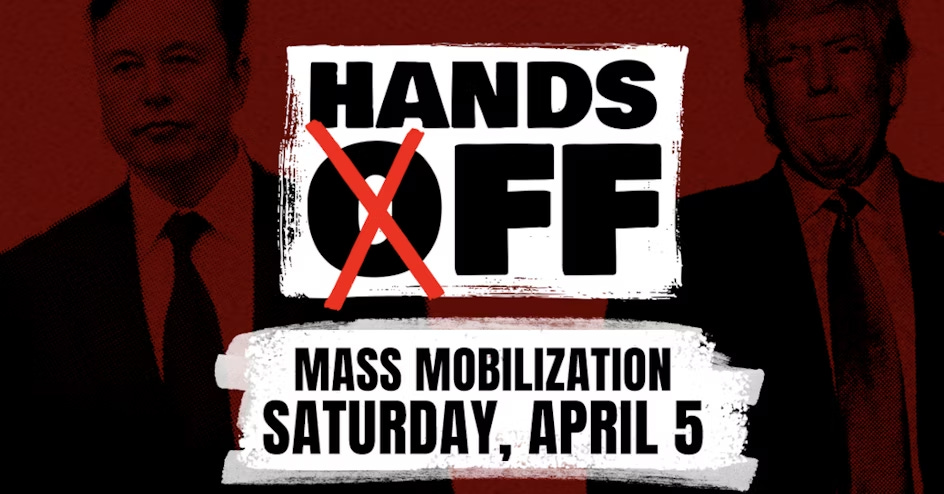
If you are interested in hosting a Hands Off! event in your area, you can sign up for an informational meeting to be held on March 21.
You can find out more about your April 5 Hands Off! Event at the event’s webpage, handsoff2025.com.