


Welcome!
Welcome to The Resistance Sentinel, a publication dedicated to documenting and amplifying the movement to defend democracy against authoritarian rule. Our collective of researchers and analysts highlights the inspiring responses of citizens and organizations across the country while providing curated coverage of resistance activities and practical knowledge for effective engagement. Join us in turning awareness into action as we work together toward a more just and democratic future.
Daily Inspiration
Boston Mayor Michelle Wu responded to so-called “border czar” Tom Homan for his threat to “bring Hell” to Boston, emphasizing her commitment to bring peace and safety instead. This reflects the importance of local leadership in resisting authoritarian tendencies.
What happened: Boston Mayor Michelle Wu criticized former ICE Acting Director Tom Homan for his inflammatory comments about bringing "hell" to Boston, accusing him of lying about the city's safety and insulting its police commissioner. Wu contrasted his rhetoric with her administration's focus on fostering peace and ensuring public safety.
Why it matters: Local leaders like Mayor Wu play a pivotal role in resisting authoritarianism by challenging divisive rhetoric and standing up for democratic principles. By promoting transparency, accountability, and community-focused governance, such actions counteract fear-mongering and reinforce the importance of local autonomy in safeguarding democratic norms.
You can watch a short clip of her response at YouTube:
After being removed from the State of the Union address on Tuesday, Texas Representative Al Green spoke in the House of Representatives in response to GOP efforts to censure him. He said he would take whatever punishment came his way, that he did not regret his actions and would take them again. Once again, Representative Green is an example of putting virtue above decorum and personal safety. Unfortunately, as noted below in today’s issue, the GOP was joined by ten of his Democratic colleagues in voting to censure him.
Resistance Today
Civil Society & Publics
New data shows the possible impact on retailers from the February 28 consumer boycotts, with some businesses seeing decreased traffic and sales while others remain resilient. The actions highlight growing public pressure on companies over diversity, equity, and inclusion policies. Simultaneously, massive protests across the U.S. are uniting scientists, educators, unions, and citizens to resist Trump administration policies that threaten research, education, and democratic norms. These movements highlight the growing need for solidarity in defending democracy against authoritarian trends.
Economic boycotts
What happened: A one-day economic blackout on February 28, 2025, aimed to impact major retailers by encouraging consumers not to spend money. Data from various firms showed mixed results, with some retailers experiencing decreased foot traffic and online visits compared to previous weeks and the same period last year. However, Amazon's sales remained relatively stable, even showing a slight increase on the day of the boycott. Notably, online traffic increased for Costco, which has received support for its support for DEI policies.
Why it matters: These boycotts demonstrate the power of collective consumer action in challenging corporate policies and practices. By targeting companies retreating from diversity, equity, and inclusion (DEI) initiatives, activists are leveraging economic pressure to advocate for social change. This grassroots approach to corporate accountability showcases how civil society can influence business practices and promote more inclusive policies, even in the face of political opposition.
The Headlines
Solidarity & movement building
What happened: Protests erupted nationwide against Trump administration policies cutting funding for education and scientific research, targeting diversity initiatives, and threatening public programs. In New Haven, unions and immigrant rights groups marched to defend public schools, while in Philadelphia and New Jersey, academics rallied against cuts to research funding. The "Stand Up for Science" movement organized demonstrations in over 50 states to oppose these measures. Meanwhile, broader protests sought to unify disparate opposition to Trump’s sweeping agenda, with events addressing issues from climate policy to civil liberties.
Why it matters: These protests exemplify grassroots resistance to authoritarianism by mobilizing diverse coalitions across sectors and communities. Drawing on lessons from historical movements, such as those resisting autocracy globally, these efforts demonstrate the power of collective action in challenging executive overreach and preserving democratic norms. By fostering cross-class, multiracial alliances, these movements can counteract fragmentation and build a resilient pro-democracy front capable of enduring authoritarian pressures.
The Headlines
Academics in N.J., Philly protest Trump administration cuts to scientific research
Hit by 'Gut Punches,' Scientists Band Together to Protest Trump
Demonstrators across 50 states look to unify a disparate opposition to Trump and his sweeping agenda
Bureaucratic & Executive
Federal agencies are resisting the Trump-Musk regime's attempts to dismantle the civil service, highlighting growing tensions between career civil servants and political appointees.
What happened: The Merit Systems Protection Board ordered the temporary reinstatement of over 5,000 USDA employees fired since February 13, citing potential violations of civil service laws. Employees of the U.S. African Development Foundation blocked DOGE officials from entering their building to terminate staff. The Trump administration abruptly removed a list of 443 federal properties targeted for sale after facing backlash from Congress and federal agencies.
Why it matters: These incidents demonstrate the importance of an independent civil service in resisting authoritarian overreach. By challenging unlawful terminations and defending their agencies' missions, federal employees are exercising their power to protect democratic norms and resist arbitrary executive actions. In some cases, they are chalking up some small wins. This resistance highlights the crucial role of bureaucratic checks and balances in maintaining government accountability and preventing the consolidation of power in the executive branch. Research on resistance movements demonstrates that resistance from the civil service is crucial to slowing authoritarian consolidation. Our civil servants are to be applauded and encouraged to resist in whatever ways they can.
The Headlines
Thousands of USDA Staff Temporarily Rehired by Appeals Panel
Small federal agency blocks DOGE employees from entering its building
Trump administration yanks list of 443 federal buildings targeted for sale after backlash
Legal & Judicial
Federal judges blocked Trump's sweeping funding freeze and mass firings, but the administration scored a key win in dismissing a watchdog head. At the same time, the regime has signaled its intent to defy court orders requiring agency heads to testify. While courts remain a crucial battleground, we are reminded that courts alone cannot restore democracy for us.
What happened: Two federal judges issued rulings blocking President Trump's attempts to freeze billions in federal funding and fire thousands of federal employees. Judge John McConnell found that Trump's funding freeze violated the separation of powers, encroaching on Congress's authority over spending. Another judge halted mass firings of probationary federal employees, calling the move "aberrational". However, the D.C. Court of Appeals allowed Trump to fire Hampton Dellinger, head of the Office of Special Counsel, a key federal whistleblower agency. The regime also signaled that it intends to violate a court order mandating that agency heads testify.
Why it matters: These legal battles highlight the crucial role of an independent judiciary in resisting authoritarian overreach, but also reveal the limits of relying solely on courts to safeguard democracy. While judges have temporarily blocked some of Trump's most extreme actions, the administration's ability to remove a key watchdog demonstrates ongoing vulnerabilities in democratic institutions. The mixed results underscore that sustained, multi-faceted civic engagement beyond the courtroom is essential to effectively resist authoritarian tendencies and protect democratic norms and processes.
The Headlines
Judge indefinitely blocks Trump's sweeping OMB funding freeze
Trump admin 'will not produce' agency head for court-ordered testimony, plaintiffs say
Federal Watchdog Head Drops Lawsuit Challenging His Dismissal
D.C. Appeals Court Allows Trump's Firing of Head of Watchdog Agency
Trump's Funding Freeze Violated Separation of Powers, Judge Rules
Judge Blocks Trump's Funding Freeze, Saying White House Put Itself 'Above Congress'
Congress & Lawmakers
Congressional Democrats show continued weakness in their resistance to authoritarian consolidation by Trump and Musk, with some pushback against Musk's DOGE initiative but also internal divisions over protest tactics against Trump's speech. Defections by 10 House lawmakers and Senator John Fetterman on Representative Al Green’s protest at the State of the Union are alarming and raise serious doubts about whether Democratic lawmakers understand the existential nature of the threat to the Republic and whether they can come together fast enough to mount an effective resistance.
What happened: GOP senators demanded final approval over Elon Musk's DOGE budget cuts, insisting on congressional oversight. Rep. McIver introduced a bill to reinstate federal workers fired by DOGE with back pay, garnering support from 66 cosponsors and labor unions. However, 10 House Democrats joined Republicans in censuring Rep. Al Green for protesting during Trump's speech, and Sen. Fetterman criticized his party's "unhinged petulance" in response to Trump.
Why it matters: These events reveal both strengths and weaknesses in congressional Democrats' resistance to authoritarian consolidation. While some Republicans pushing back against Musk's unilateral power and Democrats introducing legislation to protect federal workers are positive signs, the censure of Representative Al Green and internal criticism from Senator Fetterman indicate a lack of unity in opposing Trump's agenda. This division will undermine efforts to defend the Republic from what is an existential threat. The mixed response highlights the ongoing challenge of mounting a cohesive and effective opposition to naked authoritarianism within the legislative branch.
The Headlines
10 Democrats join with Republicans to censure Rep. Al Green for Trump speech protest
McIver Introduces Bill to Reinstate DOGE-Fired Federal Workers with Back Pay
State & Local Governments
Gavin Newsom's wavering resistance while other state and local leaders stepping up highlight contrasting approaches to challenges posed by authoritarian policies. Newsom's mixed signals on progressive issues risk undermining Democratic unity, while state and local leaders in Arizona, Pennsylvania, and beyond are taking decisive action to counter federal overreach. The developments underscore the importance of leadership, clarity of message and goals, and grassroots mobilization in defending democracy. So far, these elements have yet to cohere as time draws short to stop the Trump-Musk destruction of the government and democracy.
Gavin Newsom's Wavering Resistance
What happened: California Governor Gavin Newsom has recently taken stances that diverge from his party's progressive platform. He criticized the inclusion of transgender athletes in women's sports as "deeply unfair," aligning with conservative rhetoric, and sought advice from right-wing influencer Charlie Kirk on Democratic strategy. Meanwhile, Newsom approved $50 million to defend immigrant rights and California policies against the Trump administration's actions, including mass deportations and legal challenges to state laws.
Why it matters: Newsom's contradictory positions reflect broader tensions within the Democratic Party about how to address cultural and political divides. While his funding for immigrant protections demonstrates resistance to authoritarian federal policies, his comments on transgender athletes risk legitimizing exclusionary narratives. This inconsistency could weaken Democratic cohesion, a critical factor in resisting authoritarianism. Unified messaging and action are essential for building a strong pro-democracy coalition capable of countering autocratic trends.
The Headlines
Gavin Newsom Splits With Democrats on Transgender Athletes: ‘It’s Deeply Unfair’
Gov. Newsom approves $50M to protect immigrants, California policies against Trump
Gavin Newsom asks Charlie Kirk to give his party 'advice' in one-on-one podcast interview
Why Gavin Newsom Is Siding With Trump On Trans Athletes In Women's Sports | EXPLAINED
Arizona, Pennsylvania & Local Mayors Step Up
What happened: State and local leaders are actively resisting federal overreach under the Trump administration's second term. Pennsylvania Governor Josh Shapiro issued an executive order to recruit federal workers fired by Trump’s workforce cuts, emphasizing their expertise as an asset for state governance. Arizona Governor Katie Hobbs criticized federal layoffs affecting the Grand Canyon but refused to use state funds to mitigate their impact without guarantees of reimbursement. Meanwhile, mayors of sanctuary cities passionately defended immigrant-friendly policies during a contentious congressional hearing.
Why it matters: These actions highlight the critical role of state and local governments in countering authoritarian policies that undermine democratic norms and public welfare. By stepping into gaps left by federal rollbacks, these leaders demonstrate how decentralized governance can serve as a bulwark against autocracy. Their efforts align with strategies emphasizing local power-building and community resilience as key defenses against authoritarian consolidation.
The Headlines
Gov. Shapiro signs executive order with plan to recruit federal workers fired by Trump
Hobbs says she won't use Arizona funds to reduce Grand Canyon delays after Trump's cuts
Arizona AG, along with several others, holds DOGE impact meeting
Takeaways From a Contentious Hearing on Big-City Immigration Policies
Media & Tech
Elon Musk's role in the U.S. government and the rise of authoritarianism are being scrutinized by non-mainstream media, highlighting critical gaps left by traditional outlets. These stories underscore the importance of independent journalism in holding power accountable, especially during democratic backsliding.
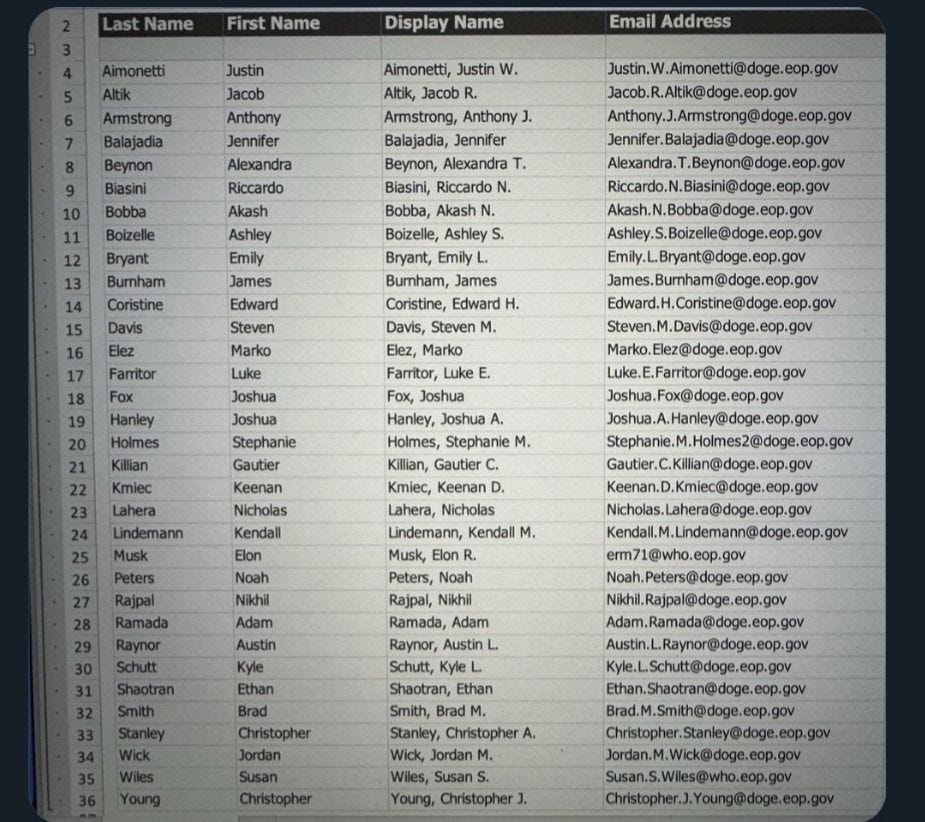
What happened: The Intercept revealed Elon Musk’s email address tied to his leadership of the Department of Government Efficiency (DOGE), a controversial entity accused of dismantling federal agencies with little transparency. The outlet filed multiple Freedom of Information Act (FOIA) requests to uncover Musk's communications amid government claims that DOGE is exempt from FOIA due to its placement within the Executive Office of the President. Meanwhile, Techdirt, which is traditionally a technology-focused publication, reflected on its pivot toward democracy-focused reporting, critiquing how mainstream political coverage often fails to expose authoritarian tactics disguised as governance, such as those seen in Musk’s and Trump’s consolidation of power.
Why it matters: These developments exemplify how online-only and tech-focused media outlets are stepping in where traditional journalism has faltered, addressing critical issues like government transparency and authoritarianism. Drawing from resistance strategies, these platforms provide a counterweight to institutional failures by exposing abuses of power and fostering public awareness. Their work is vital in mobilizing civil society against authoritarian encroachments, demonstrating how independent journalism can act as a "center of democratic power" when mainstream media neglects its watchdog role.
The Headlines
We Found Elon Musk’s DOGE Email Address and We’re Fighting to Reveal His Messages
Why Techdirt Is Now A Democracy Blog (Whether We Like It Or Not)
International Resistance
The U.S.-Canada-Mexico trade war and the U.S.-European fallout over Ukraine highlight deepening fractures in global alliances, threatening economic stability and collective security. These developments underscore the risks of nationalist policies and the erosion of trust among traditional allies. Nonetheless, increasing international isolation of and resistance to U.S. belligerence will be critical to slowing and eventually reversing the nation’s slide into authoritarianism and oligarchy.
Trade Wars, Tariffs & the Faltering North American Alliance
What happened: The U.S. has imposed 25% tariffs on Canadian and Mexican imports, sparking retaliatory measures from both nations. While Mexico received a temporary reprieve for most goods, Canada was excluded, prompting Prime Minister Justin Trudeau to warn of a prolonged trade war. Canada has imposed counter-tariffs on U.S. goods and announced plans to escalate them further. Mexico, facing steep tariffs on crude oil exports, is seeking alternative buyers in Asia and Europe to mitigate the economic fallout.
Why it matters: These trade tensions threaten the economic integration that has underpinned North American stability for decades. By undermining the USMCA framework, these policies disrupt supply chains and risk long-term economic harm to all parties involved. From a resistance perspective, this illustrates how authoritarian-style economic nationalism can weaken alliances and exacerbate global inequalities, emphasizing the need for coordinated international efforts to uphold fair trade practices, but also to undermine the authority and legitimacy of belligerent authoritarians like Trump, Musk, and Vance..
The Headlines
Trudeau expects a trade war between Canada and the US for the 'foreseeable future'
Trump changes course, delays tariffs on most imports from Mexico until April
Trudeau says Canada won't back down as Trump announces reprieve for Mexico
Exclusive: After Trump's tariffs, Mexico seeks Asian and European crude oil buyers
Trudeau Tells Americans: Your Government Has Done This to You
Ukraine, Russia & the Erosion of the U.S.-European Alliance
What happened: The Trump administration has halted military aid and intelligence sharing with Ukraine, pressuring President Volodymyr Zelenskyy to negotiate with Russia. This policy shift has alarmed European allies, prompting emergency EU summits to bolster defense spending and explore greater strategic autonomy. European leaders are debating a €150 billion defense plan while considering extending France’s nuclear deterrent to protect EU nations. Meanwhile, tensions between Trump and European leaders have escalated, with figures like French President Emmanuel Macron calling for urgent rearmament.
Why it matters: The U.S.’s retreat from its leadership role in European security has forced EU nations to reassess their defense strategies amid rising Russian aggression. This shift underscores how authoritarian leaders exploit divisions among democracies to weaken collective security frameworks. Strengthening European unity and self-reliance is critical for resisting authoritarian aggression and safeguarding democratic values globally.
The Headlines
Emergency EU summit seeks to bolster defence to counter US pivot from alliance
Where does Western Europe stand on Ukraine, Donald Trump and national defence?
Europe Races to Craft a Trump-Era Plan for Ukraine and Defense
Resistance Tomorrow
Vulnerabilities & Exposures
The Trump administration faces growing backlash over mass layoffs, protests, and declining approval ratings, exposing vulnerabilities in its pillars of power. Public dissent, economic instability, and security risks highlight cracks in the administration's control and support base.
What happened: The Department of Government Efficiency (DOGE), led by Elon Musk, has overseen mass layoffs of federal employees, with February job cuts surging 245% compared to the prior month. Protests have erupted at GOP town halls as Speaker Mike Johnson advised lawmakers to avoid direct engagement with constituents. Meanwhile, some fired employees with top security clearances were not given proper debriefings, raising national security concerns. Public discontent is reflected in a new poll showing 60% of Americans view federal workers as essential and President Trump's approval rating turning negative for the first time in his second term.
Why it matters: These developments expose significant vulnerabilities in the administration's pillars of power—public legitimacy, institutional loyalty, and economic stability. The mass firings erode institutional knowledge and morale within federal agencies, weakening their functionality and loyalty to the regime. Public protests and declining approval ratings signal a loss of legitimacy, a critical source of political power. Additionally, the mishandling of security protocols for dismissed employees creates risks that adversaries could exploit. These fractures in the administration’s power structure provide opportunities for organized resistance to further destabilize its control by undermining its authority and exploiting its internal inefficiencies.
The Headlines
Speaker Johnson tells GOP lawmakers to skip town halls after an onslaught of protests
US announced job cuts surge 245% in February on federal government layoffs
Stock market today: Dow, S&P 500, Nasdaq sink as Trump announces more tariff exemptions on Mexico
Most federal workers are essential to the US, majority of Americans in poll sayDonald Trump approval rating goes negative for first time in presidency
Actions This Week
🚨 You can take action right now by petitioning your new government for redress of grievances. Thanks to recent reporting, highlighted above, you can now email Elon Musk and all of his DOGE employees directly to express your concerns! What are you waiting for? 🚨
🚨 You can also take action this week to plan what you will do to resist next week! Take a look at the link below to see opportunities in your area organized by the good people who are part of the 50501 Movement. Remember, A.B.R. -- always be resisting…or making plans to do so. 🚨