

Welcome!
In today's Resistance Brief, we highlight the growing movement to defend democratic institutions against authoritarian threats. Emma Wilkins, a 17-year-old student, demonstrates civic courage by testifying against anti-immigrant legislation in Tennessee. Civil society scores victories through community fundraising, legal challenges, and public mobilization, while Columbia University faces criticism for capitulating to government pressure over protest rules. Federal workers endure chaotic office returns amid workforce reduction efforts, and courts deliver mixed rulings on executive actions. Internationally, Canada, Germany, and Greenland implement strategic countermeasures against aggressive US policies. Meanwhile, the "SignalGate" scandal exposes national security vulnerabilities as Republican lawmakers face constituent backlash over harmful policies. Finally, we offer ways that you can join resistance efforts in the coming days. But let’s get started with our…
Daily Inspiration
Teenager Emma Wilkins' courageous testimony and protest against an anti-immigrant bill in Tennessee exemplifies how individual acts of bravery can challenge unjust legislation. Her willingness to speak truth to power demonstrates the vital role of civic courage in defending democratic values and human rights.
What happened: Emma Wilkins, a 17-year-old high school student, delivered powerful testimony before Tennessee lawmakers opposing a bill that would prohibit undocumented students from attending public schools. Despite facing a hostile environment, Wilkins stood firm and questioned why lawmakers were targeting children who had no choice in their immigration status. The bill, which passed through committee, would allow school districts to verify students' citizenship status and potentially bar undocumented students from enrollment.
Why it matters: Wilkins' brave public testimony demonstrates how individual acts of civic courage can create powerful moments of resistance against authoritarian policies. By speaking out against legislation targeting vulnerable populations, she exemplifies how ordinary citizens can challenge unjust laws through nonviolent action and public testimony. Her courage highlights the importance of youth voices in democratic processes and shows how public testimony can expose the moral contradictions in discriminatory policies. Such individual acts of bravery are essential building blocks for broader movements that can effectively challenge authoritarian rule in governance.
The Headlines
Resistance Today
Civil Society & Publics
Civil society organizations are successfully challenging authoritarian overreach through strategic resistance, with community fundraising, legal action, and public mobilization demonstrating how ordinary citizens can effectively counter threats to democratic freedoms. Unfortunately, not all institutions are fighting back. Columbia University is implementing stricter protest rules under pressure from the Trump regime, which has canceled $400 million in federal funding over claims of unchecked antisemitism on campus. As the university regime capitulates to government demands, faculty and students are protesting these unprecedented interventions into university governance, highlighting a growing conflict between institutional financial interests and the principles of academic freedom and right to protest.
Civil Society Wins
What happened: Civil society has achieved significant victories against authoritarian threats, with community members raising $40,000 in just five days to replace state funding withheld from an Alabama library over book placement disputes. Texas A&M University students successfully sued to protect their campus drag show from a ban based on Trump's executive order on gender ideology. Meanwhile, organized resistance against Elon Musk's Department of Government Efficiency (DOGE) has resulted in multiple legal victories, with courts blocking attempts to dismantle USAID and environmental groups successfully challenging efforts to strip protections from public lands.
Why it matters: These victories demonstrate the power of civil resistance through multiple channels - community fundraising, legal challenges, and public mobilization. When citizens organize to defend democratic norms and civil liberties, they create effective barriers against authoritarian control. This multi-pronged resistance strategy shows how ordinary people can successfully protect fundamental freedoms when they actively engage in defending constitutional norms, supporting targeted institutions, and utilizing existing legal frameworks to challenge overreach by powerful actors.
The Headlines
20% of Americans support boycott of firms aligning themselves with Trump agenda
Town hall success stories, one week to go in Wisconsin, Monday updates, and weekly to-dos
Texas students sued to keep their drag show on campus. They won.
Alabama halted a library's funding. Supporters raised the cash in days.
Protests & Capitulation in Higher Education
What happened: Columbia University is implementing tighter protest regulations, including requiring masked demonstrators to show ID, prohibiting protests in academic buildings, and empowering security officers to make arrests. While a university lawyer claimed these changes were already planned, they were accelerated after the Trump regime canceled $400 million in federal research funding, citing alleged failures to address "antisemitic violence and harassment." The regime has called Columbia's concessions a "positive first step" toward potentially restoring funding, though formal negotiations have not yet begun. Meanwhile, faculty and students are protesting these changes, viewing them as an unacceptable compromise of academic freedom and the right to dissent.
Why it matters: This case demonstrates how economic leverage can be weaponized to suppress protest and dissent, a common tactic in authoritarian systems. By conditioning essential funding on specific speech and assembly restrictions, the government is effectively using financial coercion to limit civil liberties within educational institutions. The willingness of Columbia's regime to acquiesce to these demands, despite internal opposition, reveals how vulnerable universities can be to external pressure when their funding is threatened. This lack of institutional courage in defending academic freedom and student rights sets a dangerous precedent that could embolden further government intrusions at other universities, potentially leading to a broader chilling effect on campus activism and free expression nationwide.
The Headlines
Columbia Planned Tighter Protest Rules Even Before Trump Demanded Them
Columbia Faculty Protests as Trump Officials Hail University Concessions
Legal & Judicial
This week has seen a mix of wins, losses, and new legal fronts for resistance to Trump-Musk regime authoritarian consolidation. In some cases, federal courts continued to check the regime's executive actions while multiple new lawsuits challenged recent controversial policy moves. However, a federal appeals court blocked Judge Chutkan's order for DOGE records, delaying transparency efforts that could reveal workforce reduction details. The legal battles highlight the critical role of an independent judiciary and civil society organizations in maintaining democratic guardrails against potential executive overreach while also underscoring how legal maneuvers can obstruct transparency and accountability.
Resistance Wins & New Legal Fronts
What happened: The D.C. Circuit Court of Appeals ruled to maintain a block on President Trump's attempt to use the Alien Enemies Act to deport alleged Venezuelan gang members, with Judge Patricia Millett noting the plan "denies Plaintiffs even a fragile thread of due process." A 9th Circuit panel rejected the regime's request to pause a judge's order requiring reinstatement of over 17,000 probationary federal employees terminated across six agencies. Finally, in a 7-2 decision, SCOTUS ruled against the regime’s support of so-called “ghost guns.” Meanwhile, several new lawsuits have been filed challenging the regime, including cases over the use of auto-deleting messaging apps for government business, the cancellation of $400 million in federal funding to Columbia University, and executive actions to dismantle the Department of Education.
Why it matters: These legal challenges represent crucial institutional resistance to authoritarian overreach by demonstrating that courts remain willing to check executive power when it exceeds constitutional boundaries. The involvement of diverse civil society organizations—from watchdog groups to faculty unions to civil rights organizations—illustrates the importance of a vibrant civil society ecosystem in defending democratic norms through legal channels. These cases highlight how democratic resilience depends on maintaining multiple centers of power that can effectively challenge government actions through peaceful, institutional means rather than through violence. The courts' willingness to scrutinize executive actions closely provides an essential counterbalance that helps prevent the consolidation of unchecked authority in the executive branch.
The Headlines
Appeals court sides with judge who blocked deportations under wartime authority
Appeals court won't pause ruling that forced US to reinstate federal workers
American Oversight Sues Trump Administration for Using Signal to Plan Military Operations
Trump's Cuts to Columbia Were a 'Gun to the Head,' Faculty Lawsuit Says
Teachers union, NAACP sue over Trump order to dismantle Education Department
Supreme Court allows Biden-era regulations for hard-to-trace ghost guns
Resistance Losses
What happened: A federal appeals court temporarily halted an order requiring Elon Musk and the Department of Government Efficiency (DOGE) to disclose records about workforce reductions, siding with the Trump regime’s argument that the case should be dismissed before proceeding to discovery. The decision stalls efforts by states to scrutinize DOGE’s operations, which critics argue may involve politically motivated layoffs. The three-judge panel’s intervention reflects broader tensions over executive branch transparency.
Why it matters: Delaying access to records shields authoritarian-leaning institutions from public oversight, enabling unchecked power consolidation. Legal roadblocks like this undermine accountability mechanisms, a tactic often used to suppress dissent and obscure abuses. Transparency in government operations is critical to resisting authoritarianism, as it exposes patterns of coercion and allows civil society to mobilize against overreach.
The Headlines
Congress & Lawmakers
Defense Secretary Hegseth's use of Signal for sensitive military communications threatens national security and democratic accountability, highlighting the dangers of unchecked executive power combined with naked incompetence. Democratic lawmakers are pushing back by demanding hearings, investigations, and resignations, providing pro-democracy advocates a glimmer of hope that congressional Democrats may finally find their footing as an effective opposition party.
What happened: House Democrats are pressing for a hearing with Defense Secretary Pete Hegseth after The Atlantic revealed he used the Signal messaging app to discuss sensitive attack plans against Houthis in Yemen. The Atlantic's editor Jeffrey Goldberg was accidentally added to a group chat titled "Houthi PC small group," where Trump regime officials shared operational details including weapons packages, targets, and timing of military strikes. Multiple Democratic lawmakers, including military veterans like Senators Mark Kelly and Tammy Duckworth, have called for Hegseth's resignation, citing the potential risk to service members' lives. Intelligence chiefs Tulsi Gabbard and John Ratcliffe denied breaking laws or revealing classified information during congressional testimony, despite The Atlantic releasing a full transcript showing detailed operational information.
Why it matters: This incident demonstrates how authoritarianism is fostered when officials operate without transparency and accountability. When government leaders circumvent established security protocols and record-keeping requirements, they undermine democratic checks and balances that prevent abuses of power. The bipartisan concern over this security lapse shows that resistance to dangerous governance practices can transcend partisan divides when core democratic principles are at stake. Democratic lawmakers' swift and forceful response illustrates how institutional resistance mechanisms can function to challenge executive overreach and demand accountability, a crucial element in preventing authoritarian consolidation of power.
The Headlines
House Democrats press for hearing with Hegseth over Signal incident
Intelligence chiefs deny they discussed war plans on Signal in House hearing
State & Local Governments
State and local leaders are challenging Trump's federal overreach while Democrats score surprising special election victories. Governors from Oregon, Illinois, and Arizona are pushing back against Trump regime policies that they view as unconstitutional federal intrusions into state authority and civil rights. Meanwhile, Democrats have won several unexpected special elections in traditionally Republican districts, including a Pennsylvania state Senate seat that hadn't been held by a Democrat in 136 years. These developments signal growing resistance to Trump's second-term agenda and suggest his regime's policies may be mobilizing opposition at the state and local level.
Democratic Special Election Wins
What happened: Democrats have scored a series of unexpected victories in special elections across multiple states, most notably in Pennsylvania where James Andrew Malone narrowly won a state Senate seat in a district that Trump carried by 15 points in the 2024 presidential election. This district in Lancaster County hasn't been represented by a Democrat in the state Senate since 1889, making Malone's victory particularly significant. In another Pennsylvania special election, Democrat Dan Goughnour easily won a state House seat, restoring the party's narrow majority in that chamber. These Pennsylvania wins follow similar Democratic upsets in Minnesota, Iowa, and Virginia special elections held earlier this year.
Why it matters: These Democratic victories challenge the post-2024 election narrative that Republicans had entered an era of electoral dominance and that Democratic voters were too demoralized to remain engaged. The special election results suggest that voters may be reacting negatively to the early actions of Trump's second term, particularly regarding federal overreach and cuts to government services. Democratic candidates have successfully focused their campaigns on concrete local issues like education and protecting benefits for veterans, retirees, and students. This grassroots resistance demonstrates that even in areas that strongly supported Trump, voters are willing to elect Democrats who effectively address their concerns about government overreach and the protection of essential services.
The Headlines
Democrats narrowly win a Pennsylvania Senate seat, scoring an upset in Republican-leaning suburbs
Why the latest Democratic special election victories should make Republicans nervous
Governors Pushing Back Against Trump Overreach
What happened: Several governors are directly challenging Trump regime policies they view as federal overreach. Oregon Governor Tina Kotek is opposing Trump's executive order requiring proof of citizenship for voter registration and changing mail-in ballot deadlines, arguing that states, not the president, have constitutional authority over elections. Illinois Governor J.B. Pritzker delivered a fiery speech defending LGBTQ+ rights against Trump regime policies, calling for active resistance to what he termed an "illegal power grab." Arizona Governor Katie Hobbs displayed tribal flags in her office after the Trump regime ordered their removal from VA hospitals, standing up for Native American veterans whose heritage was being disrespected by new federal flag display rules.
Why it matters: These gubernatorial actions represent a critical form of institutional resistance to centralized power, creating a counterbalance to federal overreach that threatens democratic norms and civil liberties. By invoking constitutional principles of federalism and state authority, these governors are establishing legal and political barriers to policies that could disenfranchise voters, marginalize vulnerable communities, and undermine local governance. Their public opposition provides both practical and symbolic support for citizens concerned about the erosion of rights and democratic processes. This state-level resistance demonstrates how decentralized power structures can function as safeguards against authoritarian rule, giving citizens multiple avenues to defend their rights when federal policies threaten them.
The Headlines
Oregon governor to challenge Trump's election order, citing state voting control
Illinois Gov. Pritzker stands up for LGBTQ+ community in fiery HRC speech
Trump administration rules removed tribal flags from VA hospital. Now Hobbs has them on display
Media & Tech
The Trump regime's ban on Associated Press journalists from White House events highlights ongoing press freedom challenges, while late-night comedians mock a major national security breach involving a Signal group chat.
What happened: The Associated Press (AP) has been barred from official White House events since February 11, 2025, after continuing to use the term "Gulf of Mexico" instead of Trump's renamed "Gulf of America." AP journalists have resorted to unconventional methods to cover the White House, including sending foreign correspondents and relying on pool reports. Meanwhile, late-night hosts criticized the Trump regime for a significant security lapse where war plans were accidentally shared in a Signal group chat that included a journalist.
Why it matters: These incidents demonstrate the erosion of press freedom and government transparency under an authoritarian-leaning regime. The AP ban represents a direct attack on independent journalism, limiting public access to crucial information and setting a dangerous precedent for media censorship. The AP’s resistance in the face of these threats, however, should be a model for other media outlets. The Signal chat leak exposes incompetence in handling sensitive national security information, undermining public trust and potentially compromising military operations. Both situations highlight the importance of robust democratic institutions and the need for vigilant media resistance to authoritarian rule.
The Headlines
International Resistance
Trump's aggressive trade policies and territorial ambitions have sparked significant international resistance, with nations implementing strategic countermeasures to protect their sovereignty and economic interests. Canada is fighting back with retaliatory measures and boycotts as flight bookings between the countries plummet 70%. European nations, particularly Germany, are calling for firm, unified responses to Trump's auto tariffs while offering "scientific asylum" to American researchers fleeing funding cuts. The UK is cautiously navigating the trade war while European universities actively recruit US academics. Meanwhile, Greenland's citizens are effectively pushing back against US territorial ambitions through protests and viral anti-MAGA messaging that forced the scaling back of Vice President JD Vance's visit.
Elbows Up, Canada Fights Back
What happened: Trump's regime has imposed sweeping 25% tariffs on Canadian goods, prompting Prime Minister Mark Carney to call these measures "a direct attack" on Canadian workers and pledge a $2 billion strategic response fund to defend the country's auto sector. In retaliation, Canada has frozen all rebate payments for Tesla and banned the electric-vehicle maker from future EV rebate programs as long as "illegitimate and illegal U.S. tariffs are imposed against Canada." The impact is already visible in the travel sector, with flight bookings between Canada and the US down by over 70% compared to last year and airline capacity reduced through October 2025.
Why it matters: Canada's strategic response demonstrates how democratic nations can effectively counter authoritarian economic pressure through targeted countermeasures rather than escalation. By creating economic consequences through specific retaliatory actions like the Tesla rebate freeze, Canada is imposing costs on aggressive policies while maintaining diplomatic channels. This approach aligns with nonviolent resistance strategies that aim to increase the costs of maintaining harmful policies without resorting to direct confrontation. The significant drop in cross-border travel also shows how citizen-level economic choices can amplify official government responses, creating multiple layers of resistance to authoritarian pressure.
The Headlines
Canadian leaders denounce new Trump tariffs as 'direct attack' – as it happened
Flight bookings between Canada and US down 70% amid Trump tariff war
Canada freezes rebate payments to Tesla, bars it from future programs due to tariffs
Victoria's Secret and Tesla face French boycott as anti-Trump feeling surges
'A serious, serious issue': Canada's Carney jabs Trump admin after war plans leak fiasco
Could Pornhub's Canadian owners block US access to protest Trump's takeover?
Germany Stands Firm
What happened: German Economy Minister Robert Habeck has taken a strong stance against Trump's auto tariffs, declaring "we will not give in" and calling for Europe to "respond firmly" with "strength and self-confidence." The German auto industry, through its association head Hildegard Müller, has warned that the tariffs would "hurt global automakers and US manufacturing at the same time" and called for immediate negotiations between the EU and US on a bilateral agreement. German automakers like BMW, Volkswagen, and Mercedes-Benz face severe economic consequences as the US is their biggest export destination, with exports worth 56 billion euros in 2023 now threatened by the increase from 2.5% to 27.5% tariffs.
Why it matters: Germany's firm response illustrates how democratic nations can employ unified economic and diplomatic resistance to counter authoritarian trade aggression. By refusing to capitulate while simultaneously calling for negotiations, Germany is demonstrating that resistance doesn't mean abandoning dialogue—a key principle in effective nonviolent action. The German auto industry's warnings about mutual harm highlight how economic interdependence can be leveraged as a form of resistance by emphasizing the self-defeating nature of protectionist policies. This approach of standing firm while seeking resolution creates space for potential defections within the opposing power structure by appealing to rational economic self-interest rather than escalating into a destructive trade war.
The Headlines
Germany says it 'will not give in' as Trump announces 25% car tariffs
Europe lashes out over Trump auto tariffs and the economic threat to both continents
The U.K. Takes a Cautious Approach
What happened: UK Chancellor Rachel Reeves has announced that the government will not take actions to "escalate" Trump's trade wars through retaliatory measures, as Britain holds out hope for an exemption from the auto tariffs. The stakes are high for the UK, with car exports to the US worth approximately £8.3 billion annually, representing the largest share (14%) of UK goods exported to the US. The Society of Motor Manufacturers and Traders (SMMT) has expressed serious concern about the tariff increase from 2.5% to 27.5% for passenger cars, with chief executive Mike Hawes stating: "These are worrying times for U.K. vehicle makers. Without substantive regulatory easements our manufacturing viability remains at risk."
Why it matters: The UK's cautious approach demonstrates an alternative resistance strategy that prioritizes diplomatic negotiation over direct confrontation when facing authoritarian pressure. By avoiding immediate retaliation while still seeking to "secure a better trading relationship," the UK is attempting to create space for potential exemptions through strategic patience rather than escalation. This approach recognizes the power imbalance in the relationship and seeks to protect vital economic interests through careful diplomacy. The UK's strategy highlights how resistance to authoritarian rule can take multiple forms depending on specific circumstances and relative power positions, with some nations finding more value in maintaining communication channels than in symbolic but potentially self-harming retaliatory measures.
The Headlines
The European Union Responds
What happened: European Commission President Ursula von der Leyen has expressed "deep regret" over the US decision to impose tariffs on European automotive exports while pledging that "the EU will continue to seek negotiated solutions, while safeguarding its economic interests." In a significant development, European universities are offering "scientific asylum" to American researchers fleeing Trump's funding cuts and ideological impositions, with Belgium's Vrije Universiteit Brussel opening 12 postdoctoral positions specifically targeting Americans. Meanwhile, French President Emmanuel Macron has called Trump's tariffs "a waste of time" and "incoherent," arguing they would create "an inflationary effect and destroy jobs" while harming both American and European economies. European leaders are also meeting in Paris to coordinate their response to US-Russia negotiations over Ukraine.
Why it matters: The EU's multifaceted response demonstrates how democratic institutions can resist authoritarian pressure through both economic diplomacy and values-based initiatives. By offering "scientific asylum" to American researchers, European universities are creating practical alternatives that undermine authoritarian attempts to control knowledge production and academic freedom. This approach of building alternative institutions that preserve democratic values is a key nonviolent resistance strategy that reduces the effectiveness of authoritarian control. The EU's coordinated diplomatic response to both the tariffs and US-Russia negotiations shows how international solidarity and unified messaging can create effective counterweights to unilateral actions, potentially increasing the costs of maintaining aggressive policies while providing protection for democratic principles.
The Headlines
Von der Leyen vows EU will protect its interests as Trump announces huge car tariffs
European universities offer 'scientific asylum' to US researchers fleeing Trump's cuts
Europe lashes out over Trump auto tariffs and the economic threat to both continents
Astonishment in Europe at US security blunder that reveals Trump top team's suspicion of continent
Trump administration backs down in legal fight to shutter Radio Free Europe
Greenland Resists
What happened: Due to effective public pushback by the people of Greenland, the US delegation including JD Vance and his wife has been forced to scale back their trip, canceling planned "sightseeing" activities and limiting their visit to touring only the US base. An anti-MAGA hat created by Greenlandic artist Aannguaq Reimer-Johansen reading "Make America Go Away" has gone viral as Usha Vance's visit approaches, with Reimer-Johansen describing her trip as a "charm offensive." The Danish Prime Minister has called the US visit "unacceptable" pressure on Greenland. Meanwhile, Greenland's recent elections were won by the center-right Demokraatit party, which campaigned on gradual independence from Denmark and explicit refusal to join the US, with party leader Jens-Friederik Nielsen stating: "We don't want to be Americans."
Why it matters: Greenland's resistance demonstrates how even small territories can effectively counter territorial ambitions from powerful nations through coordinated public action and cultural resistance. By using creative tactics like the viral anti-MAGA hat and forcing the scaling back of the US delegation's visit, Greenland's citizens have shown how symbolic resistance can generate practical results. This approach aligns with nonviolent resistance strategies that use humor, cultural symbols, and public pressure to undermine authoritarian ambitions without resorting to violence. The electoral success of parties supporting independence rather than US alignment further shows how democratic processes can be effectively leveraged to resist external pressure, creating legitimate political mandates that strengthen a community's position against unwanted interference from more powerful actors.
The Headlines
JD Vance to join wife on Greenland visit but scales back scope of trip amid protests – Europe live
Anti-MAGA hat in Greenland goes viral: 'Make America Go Away'
US putting 'unacceptable' pressure on Greenland with planned trip by Trump officials, Danish PM says
Resistance Tomorrow
Vulnerabilities & Exposures
Trump's regime faces significant challenges as SignalGate exposes national security vulnerabilities and GOP representatives distance themselves from harmful policies. The accidental sharing of classified military plans in a Signal chat has created a potential rift with defense officials and security services, with current and former officials stating such disclosures would typically result in severe punishment. Meanwhile, Trump's policies, particularly VA cuts and tariffs, are directly harming his own voter base, causing Republican representatives to face backlash and cancel town halls as constituents express outrage. These twin crises highlight the regime's governance problems and create openings for resistance by exposing both incompetence in national security matters and the gap between Trump's promises and the negative impacts of his policies on supporters.
SignalGate Creates Potential Rift with Security Services
What happened: The Trump regime is facing a serious national security scandal dubbed "SignalGate" after National Security Adviser Mike Waltz accidentally added a journalist to a Signal group chat where officials, including Defense Secretary Pete Hegseth, shared sensitive military plans about strikes in Yemen. Current and former defense officials have stated that sharing such operational details would typically be considered a breach of national security resulting in punishment, with one official noting that "anybody in uniform would be court martialed for this." Republican senators are breaking ranks to call for investigations, with Senator Lisa Murkowski saying, "This is what happens when you don't really have your act together."
Why it matters: SignalGate represents a critical vulnerability in the regime's approach to governance and security that resistance movements can exploit. The incident has created a potential rift between the regime and security services, with military professionals likely viewing the casual sharing of operational details as dangerously unprofessional. This provides an opportunity for resistance by highlighting incompetence in national security matters and creating space for defections from security professionals who value protocol and professionalism. The scandal also demonstrates that the regime's communication practices are vulnerable, with additional security lapses revealed such as officials leaving their Venmo friend lists public, exposing networks of contacts that could be exploited by adversaries.
The Headlines
GOP Representatives Run as Trump Harms Supporters
What happened: Trump regime policies are directly harming his own voter base, creating political vulnerabilities for Republican representatives. A new analysis shows that US cities most vulnerable to Trump's trade war with Canada are largely in states that helped return him to the White House. Meanwhile, veterans like Anthony Muro are being fired from VA jobs as part of Trump's sweeping cuts led by Elon Musk, with Muro stating, "It's almost like he's trying to tear the VA down." Republican Representative Harriet Hageman has canceled in-person town halls after facing hostile crowds in Wyoming, with constituents expressing anger over federal cuts affecting their communities.
Why it matters: The direct harm Trump's policies are causing to his own supporters creates opportunities for resistance by exposing the gap between his promises and the negative impacts of his governance. Veterans who voted for Trump are now expressing regret as they lose jobs and services, creating potential for defections from a key support base. The vulnerability of Republican representatives to constituent anger, as demonstrated by Hageman canceling town halls, shows that public pressure can be effective in forcing accountability. These developments suggest that economic impacts and service cuts could be powerful organizing points for resistance movements, particularly in states that voted for Trump but are now experiencing negative consequences from his policies.
The Headlines
US cities located in states won by Trump would be most hurt by Canadian tariffs, an analysis finds
He Served His Country And Voted For Trump. Now He Has Regrets.
Hageman cancels in-person town halls, opts for virtual events citing safety concerns
Actions This Week
There are several big opportunities in the coming days where you can join in or learn about effective resistance.
🚨 Join the TeslaTakedown - Multiple Locations, March 29, 2025 🚨
What happened: TeslaTakedown is a coordinated campaign of protests at Tesla locations across the United States, with events scheduled in multiple cities across the country. The campaign includes preparation resources such as free de-escalation training for participants to ensure peaceful and effective demonstrations.
Why it matters: These coordinated protests provide a strategic opportunity for citizens to collectively challenge corporate power that supports authoritarianism. By targeting visible symbols of Elon Musk's influence—who now leads Trump's Department of Government Efficiency (DOGE)—protesters can demonstrate public opposition to the merging of corporate and government power, while building solidarity networks that can be activated for future resistance actions.
Information & Resources
Tesla Takedown Website - Find an action near you
Protest Preparation: Free De-escalation Training - March 26, held online. Plan to attend before going to a protest so that you know how to maintain nonviolent discipline.
🚨 Send Trump a Message with the Hands Off protests - Washington DC & nationwide, April 5, 2025 🚨
What happened: A major mobilization is being organized in Washington, DC and nationwide on April 5th, bringing together multiple organizations. The event aims to be a large-scale demonstration against what organizers describe as dictatorial leadership.
Why it matters: Mass demonstrations at symbolic locations like the nation's capital serve as powerful visual representations of public dissent that can inspire further resistance. This coordinated action across multiple organizations demonstrates the kind of united front that resistance scholars identify as crucial for effective opposition to authoritarian regimes, while providing participants with connections to ongoing resistance networks.
Information & Resources
📚 Backsliding and Resistance in the United States - Harvard Ash Center Webinar on April 3 📚
What happened: The Harvard Ash Center is hosting a webinar featuring Professors Erica Chenoweth and Steven Levitsky discussing lessons from historical mobilization and opposition to autocracy in the United States. The event is part of the Center's "Understanding Disruption" series examining various domains experiencing political disruption.
Why it matters: Educational events like this provide crucial historical context and strategic frameworks for effective resistance. By learning from scholars who study nonviolent resistance, authoritarianism, and democratic backsliding, participants can develop a more sophisticated understanding of resistance tactics and strategies, while connecting with others concerned about protecting democratic institutions.
Information & Resources
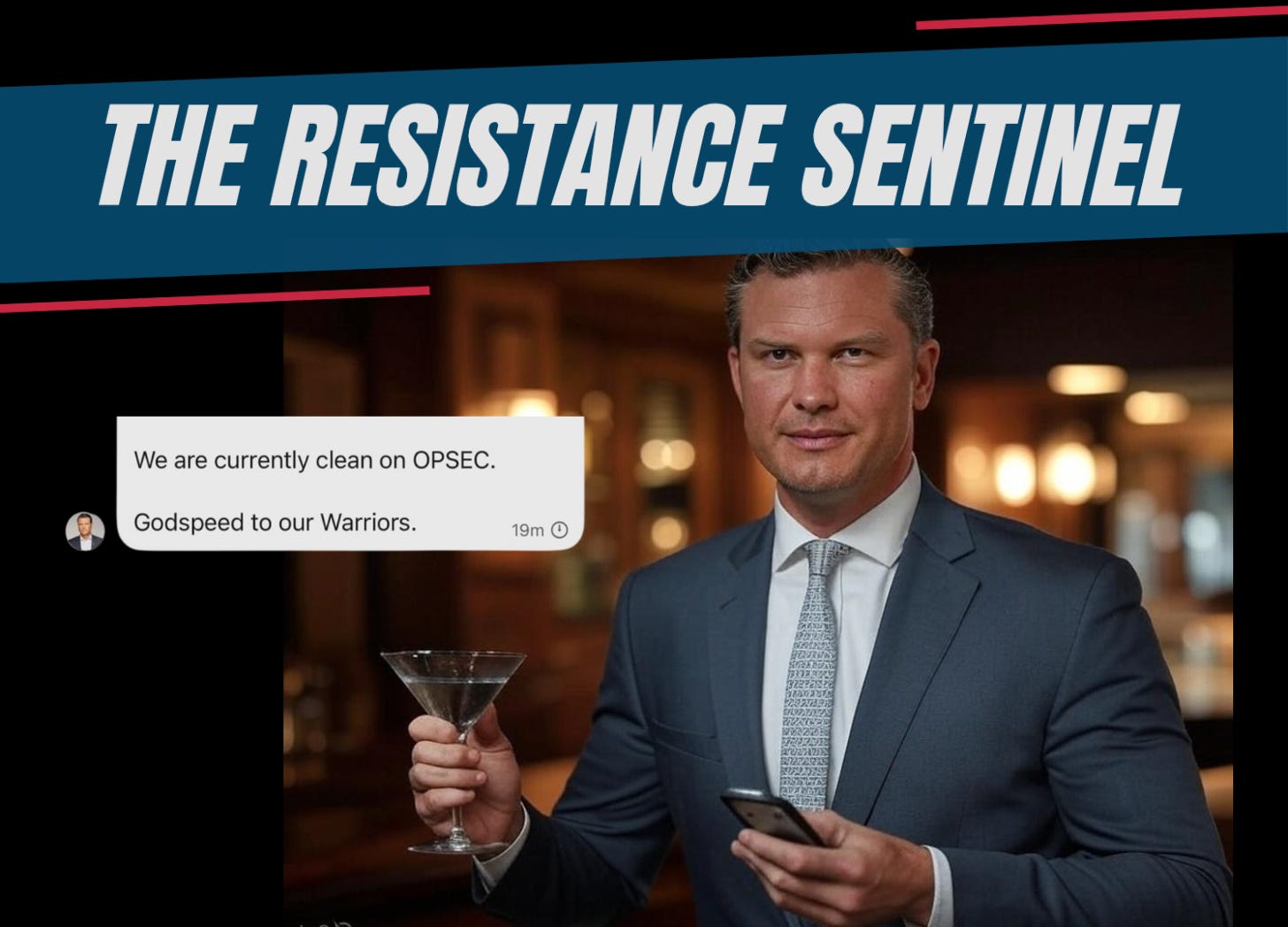
Finally, we leave you today with some humor about SignalGate, because if we can’t laugh, we’ll only cry at the malicious incompetence of the Trump-Musk regime. Enjoy!